2026-08-27 · Carl Watson
Logansport's Lead & Galvanized Water Line Replacement: What It Means for Your Water Heater
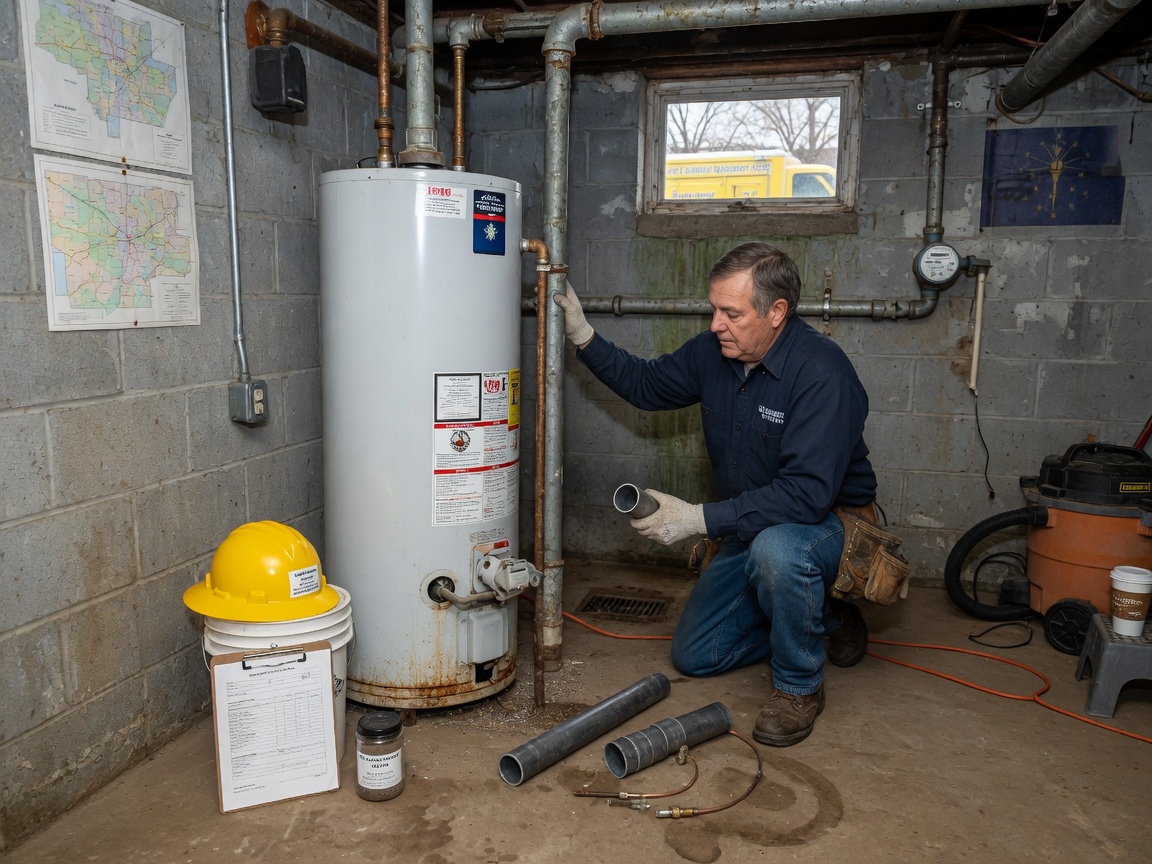
In Logansport, replacing lead and galvanized water lines often extends water heater service life by limiting the corrosion and sediment those pipes feed into the tank. Older housing stock near the Eel River and in neighborhoods such as Downtown and Highland Park still carries these lines, and the county's humid continental climate brings freezing winters that accelerate pipe degradation while hot summers increase water demand.
Pipe Age and Local Housing Stock
Homes built before the 1960s in Downtown Logansport and along East Broadway frequently retain galvanized supply lines that rust from the inside. Cold winter temperatures in Cass County cause contraction that loosens scale, sending flakes into the water heater where they settle at the bottom and reduce heat transfer. This pattern appears less often in newer construction on the West Side but remains common enough that plumbers check line material first when a 40-gallon or 50-gallon unit fails early.
Climate Effects on Line Condition
Logansport's cold winters and freeze-thaw cycles stress threaded galvanized joints more than plastic alternatives. When those joints leak, air enters the line and speeds internal rust. Hot summers increase hot-water use, which draws more water through the corroded sections and carries additional sediment to the heater. Residents in Highland Park and near the Cass County Courthouse see this seasonal cycle repeat every year.
What Replacement Means for the Water Heater
Once lead and galvanized lines are swapped for copper or PEX, the volume of rust and mineral particles reaching the tank drops sharply. Lower sediment load keeps the burner or element from working against a thick layer of scale, so recovery times stay closer to factory specs. Homeowners in Peru and Kokomo who completed line work report fewer water heater repair calls in the following seasons because the new piping delivers cleaner water year-round.
Steps During a Typical Replacement
- Shut off water at the curb and drain the system.
- Cut out the old galvanized sections from the meter to the water heater inlet.
- Install new line with proper dielectric unions to prevent future corrosion at the connection point.
- Flush the heater tank to remove existing sediment before restoring service.
These steps protect the heater's glass lining and anode rod from accelerated wear that old pipe debris would otherwise cause.
When to Coordinate Line Work with Heater Service
If a heater already shows heavy scale or slow recovery, replacing the supply line first prevents the new unit from inheriting the same problem. Water heater repair technicians often recommend flushing after line replacement to clear any remaining debris. In Logansport Southwest and Logansport West, where many homes sit on older mains, this sequence keeps both the lines and the heater operating at peak efficiency through the next winter freeze.
Long-Term Considerations for Cass County Homes
New piping also supports future upgrades such as tankless models that require consistent flow and pressure. The 2026 DOE water heater rules will emphasize efficiency ratings, and clean supply lines help any unit meet those standards without extra strain. Homeowners near Riverside Park or Twelve Mile who plan replacements now can avoid repeating excavation when they later install a high-efficiency model. 2026 DOE Water Heater Rules and Rebates: What Logansport Homeowners Should Know outlines the coming changes and how line condition factors into compliance.